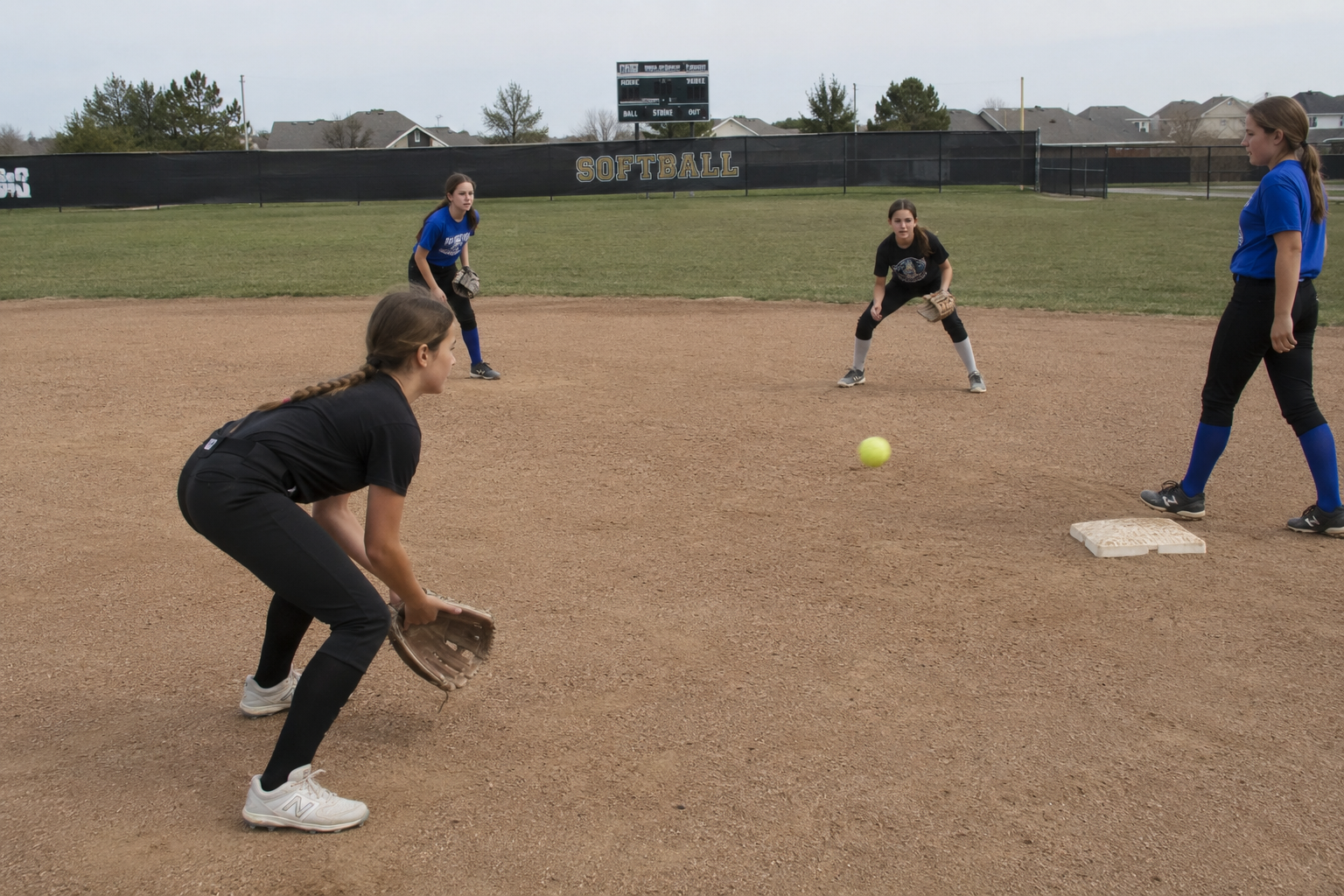
Building Communication, Trust, and Teamwork
A great softball infield is about much more than having talented players at shortstop, second base, third base, and first base.
You can have four players with strong arms, quick feet, and excellent defensive skills and still have an infield that struggles because the players aren’t working together. The best infields aren’t necessarily the ones with the most talented individual players. They are the ones that communicate, understand their responsibilities, trust one another, and know what the other players are going to do before the ball is hit.
Getting your softball infield to work together takes time and repetition. Coaches have to create situations in practice where players are forced to communicate, make decisions, cover for one another, and learn how to respond when something doesn’t go according to plan.
Whether you’re coaching 8U, 10U, 12U, or an older team, these principles can help turn four individual infielders into one defensive unit.
1. Start With Communication
If you want your infield to work together, communication has to be one of your first priorities.
Young players often become quiet when the ball is hit. They may be concentrating so hard on fielding the ball that they forget to communicate with their teammates.
That’s where coaches need to build the habit.
Teach your players that communication begins before the pitch is thrown, not after the ball is hit.
Before every pitch, your infielders should know:
- How many outs there are.
- Where the runners are.
- What the likely play is.
- Who is covering each base.
- Who is backing up.
- What the defense should do on a ground ball.
- What the defense should do on a bunt.
- What happens if the ball gets through.
Your players don’t need to yell constantly. They need to communicate useful information.
Simple phrases such as “One out!”, “Runner on first!”, “Force at two!”, “I’ve got it!”, “Base!” and “Back!” can make a tremendous difference.
One of the best habits you can teach is for players to communicate before the play and during the play.
For example, if there’s a runner on first and a ground ball is hit to the shortstop, the second baseman should already know whether she is covering second. The first baseman should know what she is doing if the ball gets through. The shortstop should know the available force play.
Communication removes confusion.
And in softball, hesitation often turns a routine play into an error.
2. Teach Players Where They Need to Be
Many defensive mistakes aren’t really throwing or catching mistakes.
They’re positioning mistakes.
A player may make an excellent play but still be in the wrong place because she didn’t understand her responsibility.
Every infielder should know where she needs to be in common game situations.
For example, practice situations such as:
- Runner on first, no outs.
- Runner on second, no outs.
- Runners on first and second.
- Runner on third.
- Bases loaded.
- Two outs with a runner on first.
- Runner on first with a bunt situation.
- Runner on second with a bunt situation.
Don’t simply tell players where to stand.
Explain why they’re standing there.
When players understand the reason behind their positioning, they become better decision-makers.
A second baseman shouldn’t just know, “I cover second.”
She should understand when she covers second, when she backs up a throw, when she charges a bunt, and when she needs to move toward first.
The same applies to every position.
3. Make the Infield Think as a Unit
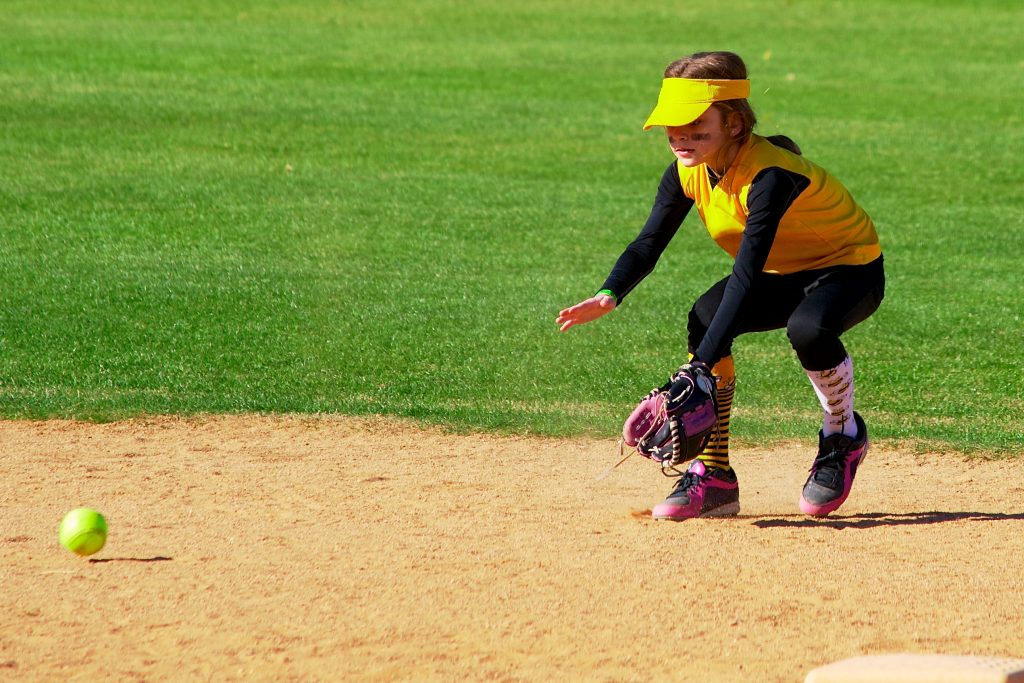
One of the biggest mistakes coaches make is practicing every defensive position separately all the time.
Individual drills are important, but your infield also needs to practice together.
Your shortstop needs to understand what the second baseman is doing.
Your second baseman needs to understand what the first baseman is doing.
Your third baseman needs to understand what the shortstop is doing.
Your first baseman needs to understand what everyone else is doing.
The players need to see how their individual responsibilities connect to the rest of the defense.
Think of your infield like a puzzle.
Each player has her own job, but the pieces have to fit together.
4. Practice Communication Drills
Don’t just tell your players to communicate.
Practice it.
One simple drill is the Communication Ground Ball Drill.
Place your four infielders in their normal positions. Hit ground balls to different locations and require the players to communicate throughout the play.
For example, hit a ground ball between shortstop and second base.
The players must communicate about who is taking the ball.
Then repeat the drill with balls hit between third base and shortstop.
The goal isn’t just to field the ball.
The goal is to teach players to recognize situations and communicate automatically.
You can even make communication part of your scoring system.
If the players execute the play but fail to communicate, don’t give them full credit.
You’re teaching a habit.
5. Teach “I’ve Got It”
One of the most important phrases an infielder can learn is:
“I’ve got it!”
This is especially important on balls that can be reached by two players.
Examples include:
- Shortstop and second baseman.
- Shortstop and third baseman.
- First baseman and second baseman.
- Pitcher and first baseman.
- Pitcher and third baseman.
The player who is making the play needs to be loud and decisive.
You don’t want two players running toward the same ball.
You also don’t want two players assuming the other person has it.
Teach your players that the person with the best opportunity to make the play should take charge.
6. Teach Players to Back Each Other Up
Backing up is one of the easiest ways to improve team defense.
Unfortunately, young players often watch the ball after someone else fields it.
Teach them to immediately think:
“Where can I help?”
If the shortstop fields a ground ball and throws to first, another player should have a backup responsibility.
If the catcher throws to second, another player should be thinking about where the ball could go if the throw gets away.
Backing up doesn’t always mean standing directly behind the person receiving the throw.
It means positioning yourself where you can prevent an extra base if something goes wrong.
This mindset can save games.
7. Practice Cutoffs and Relays
Cutoffs and relays are another area where the infield must work together.
Your outfielders can have great arms, but if the infield doesn’t execute the relay correctly, runners can take extra bases.
Practice the entire sequence:
Outfield → cutoff player → base
Teach your players:
- Who is the cutoff?
- Where should the cutoff player stand?
- Who is covering the base?
- Where should the cutoff player line up?
- What does the cutoff player do if the throw is off target?
- What happens if the runner advances?
Don’t wait until tournament season to teach this.
Make it part of your regular practice routine.
8. Work on Bunt Defense
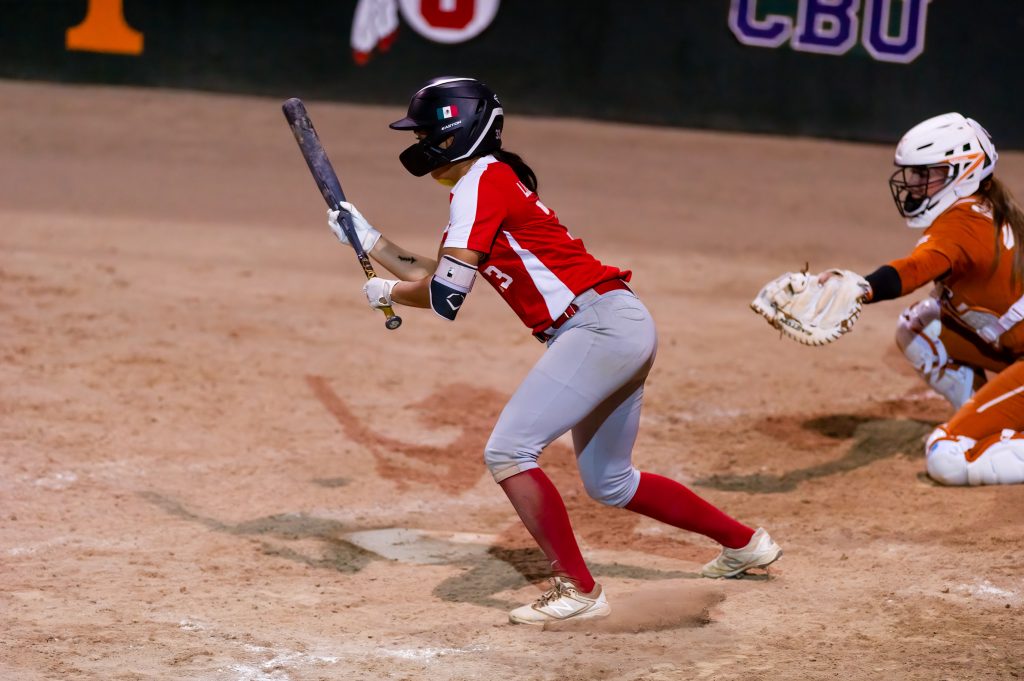
Bunt defense is one of the best ways to test whether your infield is communicating.
Everybody has a responsibility.
The third baseman may charge.
The first baseman may charge.
The pitcher may field the ball.
The catcher may give instructions.
The shortstop and second baseman have coverage responsibilities.
This can quickly become chaos if the players don’t know what they’re supposed to do.
Practice bunt defense repeatedly.
Start without runners.
Then add runners.
Then add game situations.
Eventually, your players should react without having to stop and think about every movement.
9. Practice With Runners
Defensive drills without runners are useful, but eventually you need to add runners.
Why?
Because runners change everything.
A ground ball isn’t simply a ground ball anymore.
The defense has to think about:
- Force plays.
- Tag plays.
- Stealing.
- Pickoffs.
- Covering bases.
- Holding runners.
- Relays.
- Backups.
Start with controlled situations.
For example:
“Runner on first, one out.”
Then hit the ball and see whether your players understand the correct play.
Afterward, stop and discuss what happened.
Don’t turn every mistake into a punishment.
Use mistakes as teaching opportunities.
Ask:
“Where should you have been?”
“Who was covering second?”
“Who was backing up the throw?”
“What was the easiest out?”
This teaches players to think rather than simply memorize.
10. Teach Players to Know the Number of Outs
This sounds simple, but it is incredibly important.
Players should know the number of outs before every pitch.
Make it part of your defensive routine.
Before the pitch, have your players communicate:
“Nobody out!”
“One out!”
“Two outs!”
This helps players make better decisions.
A player who knows there are two outs may be more aggressive because there is no force-play opportunity at another base after the catch.
A player who knows there are no outs may have different options.
Knowing the situation helps players make smart decisions.
11. Teach the Difference Between the “Right Play” and the “Perfect Play”
Young players sometimes think every ball must result in an out.
That’s not realistic.
A good defense understands that sometimes the best play is simply preventing the runner from advancing.
For example, a ground ball may be too slow to make the play at first.
Instead of rushing a bad throw, the infielder may be better off holding the runner or taking the safe out.
Teach your players to make decisions based on the situation.
The goal isn’t always to make the spectacular play.
The goal is to make the smart play.
12. Build Trust Between Players
Trust is a huge part of defensive chemistry.
Your shortstop needs to trust the second baseman.
Your second baseman needs to trust the shortstop.
Your first baseman needs to trust the infielders throwing to her.
That trust develops through repetition.
The more your players practice together, the more comfortable they become with one another.
They begin to understand things such as:
- How hard someone throws.
- Where someone prefers to receive a throw.
- How quickly someone gets to the ball.
- Who communicates loudly.
- Who needs reminders.
- Who is aggressive charging the ball.
- Who is better at making certain plays.
This is why defensive repetitions matter so much.
13. Rotate Players Through Different Positions When Appropriate
Especially with younger players, don’t be afraid to give them experience at multiple positions.
A third baseman who spends time at shortstop will develop a better understanding of what the shortstop does.
A shortstop who plays second base will understand second-base responsibilities better.
A first baseman who experiences another infield position will gain a greater appreciation for what the other players are doing.
Position flexibility can make your entire defense smarter.
It also helps players understand the game from different perspectives.
14. Use “What If?” Scenarios
One of the best ways to teach softball IQ is to stop practice and ask questions.
Put your players in position and ask:
“Runner on first. One out. Ground ball to shortstop. What are we doing?”
Let the players answer.
Then change the situation.
“Runner on first. Two outs. Ground ball to second.”
Then:
“Runner on second. No outs. Ground ball to third.”
Keep changing the situations.
You’re teaching players to think before the ball is hit.
Eventually, they will begin doing this automatically.
15. Practice Double Plays
Double plays are an excellent way to build teamwork.
But don’t start by trying to run them at full speed.
Break them down.
Teach the footwork.
Teach the receiving position.
Teach the throw.
Teach the communication.
Then put the pieces together.
For a shortstop-to-second-to-first double play, players need to understand timing and positioning.
The second baseman needs to get to the bag properly.
The shortstop needs to make a good throw.
The first baseman needs to be ready for the next throw.
Everybody is connected.
The more repetitions they get, the smoother the play becomes.
16. Don’t Let Errors Destroy Confidence
This is one of the most important coaching principles.
Your players are going to make errors.
Every team does.
The question is how the team responds.
If one player makes an error, teach the rest of the infield to respond positively.
A simple:
“We’ve got you!”
can mean a lot to a young player.
You want your players to know that one mistake doesn’t define them.
A good defensive team picks each other up.
If the third baseman makes an error, the shortstop doesn’t roll her eyes.
If the first baseman misses a throw, the second baseman doesn’t complain.
The team moves on to the next pitch.
17. Create a “Next Pitch” Mentality
Softball moves quickly.
You don’t have time to dwell on what just happened.
Teach your players:
Next pitch.
If they make an error, reset.
If they make a great play, reset.
If they give up a hit, reset.
If they make a diving catch, reset.
The next ball is the one that matters.
This mentality is especially valuable during close games.
18. Make Defensive Practice Competitive
Players usually work harder when there’s a challenge involved.
Turn defensive drills into competitions.
For example, divide your team into two groups.
Give the defense points for:
- Clean fielding.
- Good communication.
- Correct positioning.
- Good throws.
- Backups.
- Correct decisions.
- Double plays.
Take away points for:
- No communication.
- Missed assignments.
- Lazy backups.
- Poor decisions.
This makes practice more engaging while reinforcing the behaviors you want.
19. Practice Game-Speed Defense
There is a huge difference between practicing at half speed and practicing at game speed.
Eventually, your players need to experience the pressure and pace of a real game.
Hit harder ground balls.
Use runners.
Keep score.
Create consequences.
Call out the situation before each pitch.
Make the players think.
Your goal is to make the game feel familiar.
When players have already experienced a situation dozens of times in practice, they’re much more comfortable when it happens during a tournament.
20. Develop a Pre-Pitch Routine
A consistent pre-pitch routine can transform an infield.
Teach your players to mentally check:
Where are the runners?
How many outs?
Where is the play?
Where do I need to be?
Who am I backing up?
What could happen next?
This should eventually happen automatically.
You don’t want your players standing around waiting for the ball to be hit.
You want four players who are already thinking about the play before it happens.
21. Use Your Pitcher and Catcher in Defensive Communication
Don’t forget that the infield doesn’t operate by itself.
The pitcher and catcher are part of the defensive unit.
The catcher often has the best view of the entire field.
Teach your catcher to communicate with the infield.
The pitcher also needs to understand her responsibilities after the ball is hit.
For example, after an infield ground ball, the pitcher may need to back up a base or cover an area.
The entire defense needs to work together.
22. Teach Players to Talk After Every Play
After each defensive play, encourage players to communicate positively.
A simple:
“Good job.”
“Nice throw.”
“We’re good.”
“Next pitch.”
can keep the defense connected.
It doesn’t have to be a big speech.
You are building a team culture where players support one another.
23. Have Your Infield Practice Together Outside of Regular Team Practice
If your players want to become really good defensively, extra repetitions can help.
Even 15–20 minutes before or after practice can make a difference.
Have the infielders work on:
- Ground balls.
- Footwork.
- Double plays.
- Communication.
- Bunt defense.
- Cutoffs.
- Relays.
- Backups.
Short, focused repetitions can be extremely valuable.
You don’t always need another two-hour practice.
Sometimes you just need 20 quality minutes.
24. Make Teamwork More Important Than Individual Statistics
A player may want to make every play.
That’s understandable.
But your defense shouldn’t be about who gets credit.
It should be about getting outs.
If the shortstop ranges far to her right and fields the ball, she may make the play.
If the second baseman covers the bag, she may not touch the ball at all.
But both players contributed.
Teach your players to understand that defensive success belongs to everyone.
The player who backs up a throw may never appear in the scorebook.
She still may have prevented an extra base.
That’s winning softball.
Final Thoughts
A great softball infield doesn’t happen overnight.
It develops through communication, repetition, trust, positioning, and game experience.
Your players need to know their individual responsibilities, but they also need to understand how those responsibilities connect to everyone else.
The goal is to eventually get to the point where your players don’t have to think about every little detail.
They simply react.
The shortstop knows where the second baseman is going.
The second baseman knows where the shortstop is going.
The third baseman knows who is covering.
The first baseman knows where the throw is coming.
Everyone communicates.
Everyone backs each other up.
Everyone knows the situation.
And when something goes wrong, nobody falls apart.
They simply say:
“Next pitch.”
That’s what makes a softball infield special.
It’s not four players standing at four different positions.
It’s one defensive unit working together toward the same goal.
As a coach, your job isn’t just to teach players how to catch ground balls.
Your job is to teach them how to play defense together.
When your infield learns to communicate, trust one another, anticipate plays, and respond to mistakes as a team, you’ll start seeing something special happen.
Routine plays become easier.
Players become more confident.
Errors become less damaging.
And your entire defense starts playing faster.
The best part?
Those lessons go beyond softball.
Your players are learning communication, responsibility, teamwork, confidence, and how to trust the people around them.
That’s much bigger than simply getting three outs.
That’s teaching them how to be a team.