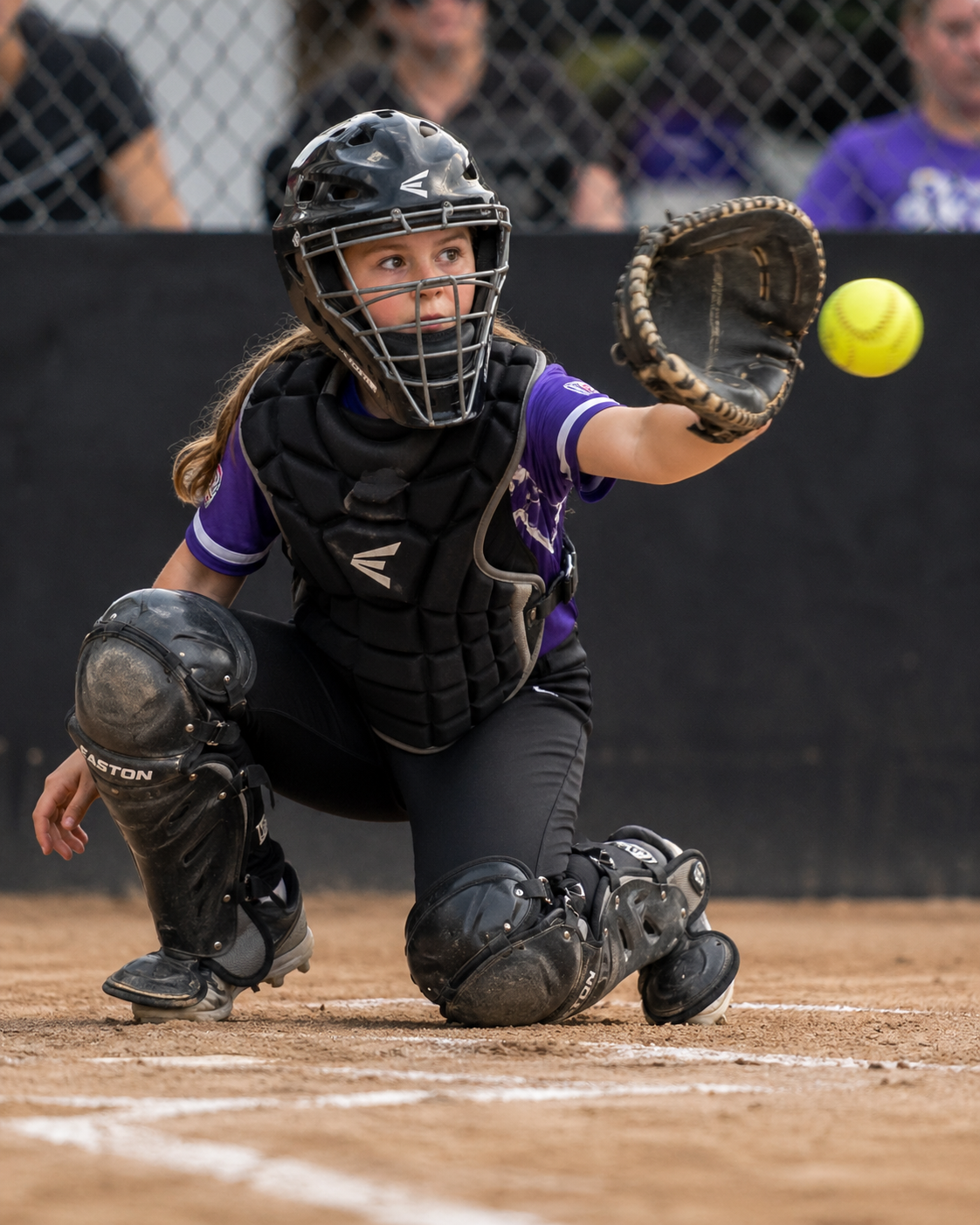
If I were building a competitive softball catcher starting at 10 years old, I wouldn’t just focus on skills—I’d build a complete athlete. Catching is one of the most demanding positions on the field. It requires leadership, toughness, quick thinking, and a unique blend of physical and mental abilities that most positions don’t demand at such a high level.
This blueprint isn’t about rushing development or putting pressure on a young player. It’s about building a strong foundation the right way—so by the time that athlete reaches middle school, high school, and eventually travel ball or college-level play, they’re confident, skilled, and prepared.
Here’s exactly how I would do it.
The Foundation Phase (Ages 9–11): Build the Athlete First
At 10 years old, the biggest mistake you can make is over-specializing too early. Yes, this player may want to be a catcher—but first, they need to become a well-rounded athlete.
1. Athletic Development Comes First
Before worrying about perfect mechanics, I would focus on:
- Coordination
- Balance
- Agility
- Flexibility
- Basic strength (bodyweight only)
This means incorporating:
- Jump rope
- Ladder drills
- Short sprints
- Bodyweight squats
- Core exercises (planks, bear crawls)
A great catcher must move well. If they can’t move, they can’t block, frame, or throw effectively.
2. Introduce Catching Slowly (2–3 Days Per Week)
At this age, I would limit catching-specific work to avoid burnout and injury.
Focus on:
- Proper stance (balanced, comfortable, not forced)
- Receiving the ball softly
- Basic blocking technique
- Simple throwing mechanics
Keep sessions short (20–30 minutes max).
Make it fun. If it feels like work at 10, you’re doing it wrong.
3. Play Multiple Positions
Even if the goal is to become a catcher, I would rotate this player through:
- Infield
- Outfield
Why?
Because great catchers:
- Understand the entire field
- Know where plays are developing
- Anticipate better than everyone else
This builds softball IQ early.
| Select 5 Crushing Drills For Epic 10U Softball Catchers | 5 Crushing Drills For Epic 10U Softball Catchers |
|---|
Skill Development Phase (Ages 10–12): Build Catcher-Specific Skills
Once the foundation is set, we begin layering in real catcher development.
4. Receiving (Framing) Fundamentals
At this age, framing isn’t about tricking umpires—it’s about clean catching.
Focus on:
- Quiet glove
- Catching the ball out front
- Minimal movement after the catch
- Thumb-to-thumb technique on low pitches
Drills:
- Tennis ball catching
- One-knee receiving
- Soft toss framing
Consistency is everything here.
5. Blocking: Fearless but Controlled
Blocking separates average catchers from great ones.
Teach:
- Drop step (not falling forward)
- Chest square to the ball
- Keep the ball in front
- Recover quickly
Important: Use soft training balls at first to build confidence.
The goal is to remove fear early.
6. Throwing Mechanics (Accuracy Over Speed)
At 10 years old, arm strength is not the priority.
Focus on:
- Quick, clean transfer
- Proper footwork
- Throwing through the target
Break it down into steps:
- Receive
- Transfer
- Footwork
- Throw
Drills:
- Knee throws
- Quick transfer drills
- Target throwing
Accuracy builds confidence. Speed comes later.
| Select Best Quick Transfer Drills for Softball Catchers | Best Quick Transfer Drills for Softball Catchers |
|---|
Physical Development Phase: Build Strength the Right Way
At this age, strength training must be done correctly.
7. Bodyweight Strength Program (2–3x Per Week)
Focus on:
- Squats
- Lunges
- Push-ups
- Core work
Add:
- Resistance bands
- Light medicine balls
Avoid heavy weights.
The goal is:
- Injury prevention
- Stability
- Endurance
Catchers squat A LOT—leg endurance is critical.
8. Mobility and Flexibility
This is often ignored—but it’s huge for catchers.
Daily focus:
- Hip mobility
- Ankle flexibility
- Lower back mobility
Simple routine:
- Deep squat holds
- Hip openers
- Hamstring stretches
A flexible catcher:
- Moves better
- Blocks better
- Avoids injury
Mental Development: Build a Leader Early
The catcher is the quarterback of the field.
At 10 years old, you can start building that mindset.
9. Teach Communication
Encourage the player to:
- Talk every play
- Call out situations
- Support teammates
Simple habits:
- “One out!”
- “Play at first!”
- Encouragement after mistakes
Confidence starts with communication.
10. Build Toughness
Catching is hard:
- Foul tips hurt
- Blocking isn’t fun
- You’re involved in every play
Teach:
- Shake it off mentality
- Next play focus
- No fear of the ball
This doesn’t happen overnight—it’s built through repetition and encouragement.
Weekly Blueprint (Example Schedule)
Here’s how I would structure a typical week:
Day 1: Catching + Agility
- Warm-up
- Ladder drills
- Receiving drills
- Blocking drills
- Light throwing
Day 2: Team Practice / Position Rotation
- Play different positions
- Game situations
Day 3: Strength + Mobility
- Bodyweight workout
- Stretching routine
Day 4: Catching Focus
- Framing drills
- Throwing mechanics
- Quick transfer work
Day 5: Rest or Light Activity
- Fun play (not structured)
Weekend: Games or Scrimmage
Balance is key.
Equipment Matters (But Don’t Overdo It)
At this age, you don’t need top-of-the-line gear.
Focus on:
- Properly fitting glove
- Comfortable gear
- Good helmet
Most important:
Confidence > equipment
Common Mistakes to Avoid
If I could warn parents and coaches, it would be this:
1. Overtraining
Too much catching leads to:
- Burnout
- Knee pain
- Arm issues
Keep it balanced.
2. Focusing Only on Catching
This limits development.
The best catchers:
- Are athletes first
- Can play anywhere
3. Prioritizing Velocity Too Early
Throwing hard means nothing without:
- Accuracy
- Mechanics
Build it the right way.
4. Being Too Hard on the Player
At 10 years old:
- Confidence is fragile
- Fun matters
If they stop loving the game, nothing else matters.
Long-Term Vision: Where This Blueprint Leads
If this plan is followed consistently, here’s what happens:
By Age 12–13:
- Strong fundamentals
- Confident receiver
- Solid blocker
- Accurate thrower
By Middle School:
- Leadership skills emerge
- Game awareness improves
- Physical strength increases
By High School:
- Advanced catcher skills
- Strong arm development
- High softball IQ
Travel Ball / College Potential:
- Polished mechanics
- Mental toughness
- Leadership presence
The Secret Ingredient: Consistency
No blueprint works without consistency.
You don’t need:
- 3-hour practices
- Expensive trainers
- Year-round pressure
You need:
- Smart training
- Repetition
- Patience
Final Thoughts
If I were building a competitive softball catcher starting at 10 years old, I wouldn’t chase perfection—I’d chase progress.
I’d focus on:
- Building an athlete
- Developing fundamentals
- Creating confidence
- Keeping the game fun
Because the truth is, the best catchers aren’t just built through drills—they’re built through experiences, encouragement, and a love for the game.
Start simple. Stay consistent. Keep it fun.
And over time, you won’t just build a catcher—you’ll build a leader behind the plate.